
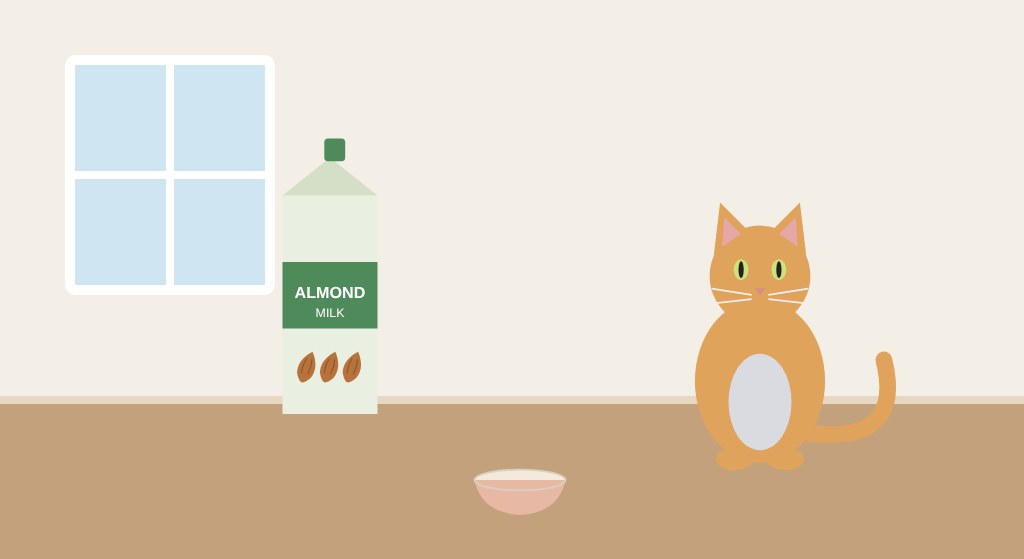
Can cats drink almond milk? It is not a good choice for cats, even though plain, unsweetened almond milk is not known to be toxic to them. Cats are obligate carnivores, and the Cornell Feline Health Center says milk “is not generally recommended as a treat for cats.” Almond milk avoids the lactose problem but offers a cat nothing it needs, and flavored versions can carry chocolate, coffee or sweeteners. A lap from your cereal bowl is rarely an emergency. If your cat drank a chocolate, coffee or heavily sweetened almond milk, or is vomiting, call your veterinarian, the ASPCA Animal Poison Control Center at (888) 426-4435 or the Pet Poison Helpline at (855) 764-7661 (24/7, a fee may apply).
This page is general information from a pet parent who reads veterinary sources, not a veterinarian.
Is Almond Milk Safe for Cats? What the Sources Say
We did not find a veterinary source that lists almond milk as toxic to cats, and we will not pretend one exists. What the sources do cover is the parts.
Cats do not need it. Cornell states that “cats are obligate carnivores, which means that they rely on nutrients found only in animal products.” Almond milk is a plant drink. It adds calories without the nutrients a cat’s diet is built around.
The milk question. Cornell also notes that “many cats are lactose-intolerant,” and the ASPCA explains that pets lack enough lactase to digest milk well, so dairy can cause diarrhea. Almond milk contains no lactose, so that specific problem does not apply. That is a point in its favor over cow’s milk, not a recommendation.
The nut question. The ASPCA says nuts, almonds included, contain high amounts of fat that can cause vomiting, diarrhea and potentially pancreatitis. Almond milk is mostly water, so far less nut is involved, but a cat with a sensitive stomach or a history of pancreatitis is a cat to keep it away from.
Is Almond Milk Toxic to Cats? The Flavored Versions
The risk sits in what gets added to the carton:
- Chocolate almond milk. Chocolate is a problem for cats as well as dogs. See cats and chocolate.
- Almond milk coffee drinks. Lattes, cold brews and creamers bring caffeine.
- Sweetened and vanilla versions. Added sugars are not poison, but they are not cat food either and are more likely to upset the stomach.
- Sugar-free versions. The FDA says xylitol “does not seem to be as dangerous for cats” as it is for dogs. That is good news, not a reason to share. If you also have a dog, keep sugar-free products away from both.
My Cat Drank Almond Milk: What Should I Do?
- Read the carton. Note chocolate, cocoa, coffee and sweeteners.
- If it contains chocolate or coffee, call now.
- If it was plain or lightly sweetened and your cat is acting normally, remove the rest, offer fresh water and watch for vomiting, diarrhea or a cat who refuses food.
- Call if your cat is a kitten, elderly, has a health condition, or shows any signs.
- Do not try to make your cat vomit. There is no safe home method for cats. Our page on what to do when a cat may be poisoned explains the general rules.
Cats are good at hiding discomfort. If your cat goes quiet and disappears after drinking something unusual, take that seriously; see a cat hiding after eating something.
Can Kittens Drink Almond Milk?
No. This is the case that matters most. Kittens who need milk need a kitten-specific milk replacer, chosen with your vet. Almond milk is not a substitute: it does not provide the protein, fat and nutrients a growing kitten depends on, and a kitten fed plant milk instead of a proper replacer can fall behind quickly. If you have found an orphaned kitten, call a vet or a local rescue the same day for feeding guidance.
How Much Almond Milk Can a Cat Have?
We do not publish amounts on this site. For treats in general, Cornell gives a rule of thumb that treats should not exceed “10 to 15 percent of a cat’s daily caloric intake.” Almond milk does not earn a place in that budget; meat-based cat treats do the job far better.
Why Cats Seem to Want It
Cats are often drawn to the smell and fat of milk, and to the ritual of being near your bowl or cup. Almond milk smells sweet and creamy, and some cats will investigate. Interest does not mean need. A cat who begs for milk can be redirected with a small portion of their own food, a lick of a cat treat paste, or play.
For the broader myths and facts about cats and dairy, see cats, dairy, raw fish and tuna. If you also have a dog, can dogs drink almond milk covers the xylitol issue, which is far more serious for them.
Sources Checked
On October 27, 2026 we read the Cornell Feline Health Center page Feeding Your Cat, for the obligate carnivore definition, the statements on milk and lactose intolerance, and the 10 to 15 percent treat guideline; the ASPCA page People Foods to Avoid Feeding Your Pets, for the statements on nuts and on milk and dairy; and the FDA consumer update Paws Off Xylitol; It’s Dangerous for Dogs, for the quoted statement about cats. This article publishes no dose, threshold or safe amount.
Frequently Asked Questions
Can cats drink almond milk?
Plain, unsweetened almond milk is not known to be toxic, but cats do not need it. It is best avoided, and never given to kittens in place of a milk replacer.
Is almond milk better for cats than cow’s milk?
It avoids lactose, which Cornell says many cats cannot handle. But neither is recommended as a treat.
My cat licked my almond milk latte. Is that dangerous?
The coffee is the concern. A small lick is often minor, but call your vet or a poison line to be sure, especially for a small cat.
Can almond milk cause diarrhea in cats?
It can, especially sweetened versions. Call your vet if diarrhea continues, is bloody, or comes with vomiting or lethargy.
This article is general information and does not replace veterinary care. If your cat drank a product containing chocolate or coffee, or is unwell, contact your veterinarian, the ASPCA Animal Poison Control Center at (888) 426-4435, or the Pet Poison Helpline at (855) 764-7661.