
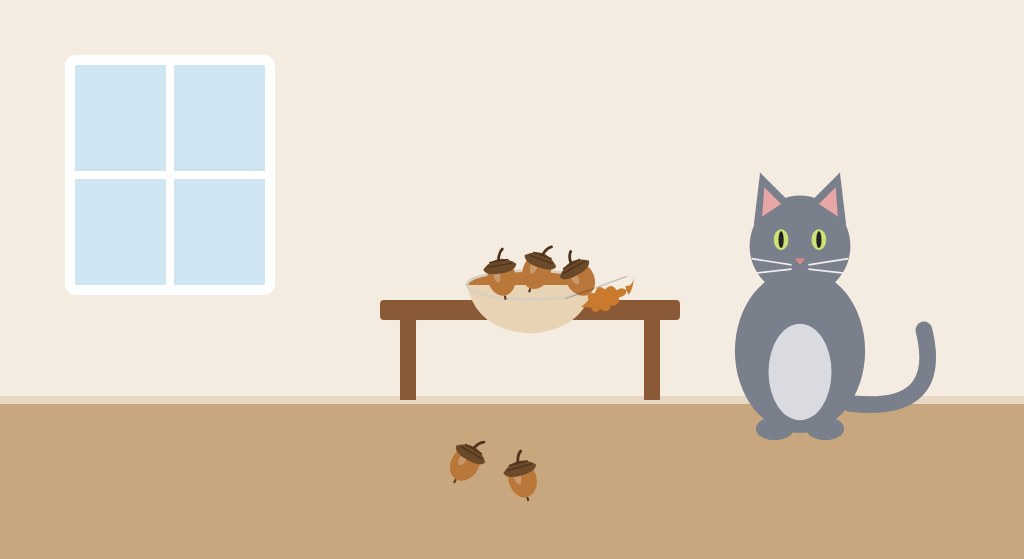
Can cats eat acorns? No. Acorns are not food for cats, and if your cat has chewed or swallowed one, the right move is a phone call, not a wait. The honest detail is that the veterinary sources say less about cats and acorns than about dogs: Merck’s oak page lists dogs among affected species and does not list cats. That gap is not a green light. Oak tannins irritate the gut, and a whole acorn can block a small intestine. If your cat has eaten any, call your veterinarian, an emergency animal hospital, the ASPCA Animal Poison Control Center at (888) 426-4435 or the Pet Poison Helpline at (855) 764-7661 (both 24/7, a fee may apply). Do not try to make your cat vomit.
This page is general information from a pet parent who reads veterinary sources, not a veterinarian.
Is Acorns Toxic to Cats? What the Sources Actually Say
Two sources do most of the work on oak, and it is worth being exact about what each one says.
The Merck Veterinary Manual’s page on oak toxicosis states that “All species of oak should be considered potentially toxic,” and that the toxic effects come from tannins, specifically hydrolyzable tannins such as gallotannins. Its list of species where toxicosis has occurred reads “horses, llamas, exotic ruminants, moose, dogs, and rabbits.” Cats are not on it.
The ASPCA Animal Poison Control Center’s oak entry gives the toxic principle as gallotannin and lists oak as toxic to horses. It notes that acorns can block the digestive tract.
So the documented feline evidence is thin. What that means in practice is that nobody can hand you a reassuring “cats are fine” source, and the mechanism that hurts other animals (tannins in the gut and kidneys) has no known reason to skip cats. Cats are also known for being sensitive to many plant compounds, which is a large part of why the site you are reading spends so much time on them.
Is Acorns Safe for Cats? Why Cats Get Into Them at All
Most cats ignore acorns as food. Cats are obligate carnivores; the Cornell Feline Health Center puts it as cats relying “on nutrients found only in animal products.” A nut has nothing a cat is looking for.
The exposures that happen are almost always about play:
- An acorn batted across a hard floor is an ideal toy, and play sometimes ends in chewing.
- Autumn decorations, wreaths and bowls of acorns put them at cat height indoors.
- Outdoor cats may chew on leaves and nuts under an oak, especially young ones.
- Acorn caps are light, rattly and easy to carry off.
That pattern matters for the risk. A cat who chews is getting tannin exposure. A cat who swallows a whole acorn or cap is getting obstruction risk, and in a cat’s small intestine that is the more urgent of the two.
My Cat Ate Acorns: What Should I Do?
- Remove the rest. Pick up acorns, caps and pieces. Check under furniture.
- Look at the mouth if your cat lets you. Lift out anything loose and visible. Do not reach into the throat.
- Call. Vet, emergency hospital or one of the poison lines. Say “acorn” or “oak,” your cat’s weight and age, and when it happened.
- Do not induce vomiting. Home emetics are not safe in cats, and a hard object coming back up is its own risk. Our page on what to do when a cat may be poisoned walks through the general rules.
- Keep a sample of the acorns and caps for the vet.
Signs to Watch For
Using the ASPCA’s oak signs and the general pattern of gut obstruction, these are the signs to report:
- Vomiting, gagging or retching, especially repeated
- Drooling or pawing at the mouth
- Not eating, or walking up to the bowl and walking away
- Constipation, straining, or diarrhea that may be bloody
- Hiding, lethargy, a hunched posture
- Changes in urination
Cats hide illness well. A cat who goes under the bed after an exposure is telling you something; our page on a cat hiding after eating something explains why that is a sign, not a mood. The broader list is in signs of poisoning in cats.
Can Kittens Eat Acorns?
No. Kittens are the cats most likely to get into acorns and the least able to cope if they do.
They play with everything, they put things in their mouths, and their gut is narrow enough that a single acorn cap or kernel could cause a blockage. They also dehydrate faster than adult cats if vomiting or diarrhea starts. If a kitten has swallowed any part of an acorn, call the same day; do not wait to see what happens overnight.
How Much Acorn Is Toxic to a Cat?
We do not publish a figure on any page, and for cats there is not even a documented one to refuse to publish. The useful answer is that the amount question is the vet’s to answer, and one swallowed acorn is enough to justify the call because of its size alone.
If You Have a Dog Too
Dogs and acorns are better documented, and the sources are clearer about the danger. Merck states that dogs can develop kidney failure and liver damage after acorn ingestion. If your dog shares the yard, read can dogs eat acorns. It also has the steps to follow if your dog got to them too.
Sources Checked
On October 27, 2026 we read the Merck Veterinary Manual page Oak Toxicosis in Animals (full review June 2026), for the statement that all oak species should be considered potentially toxic, the tannin mechanism, and the list of species in which toxicosis has occurred, which names dogs and does not name cats; the ASPCA Animal Poison Control Center entry for oak, for the gallotannin toxic principle, the listed clinical signs and the note that acorns can block the digestive tract; and the Cornell Feline Health Center page Feeding Your Cat, for the obligate carnivore quote. This article publishes no dose, threshold or safe amount.
Frequently Asked Questions
Can cats eat acorns?
No. They have no nutritional value for cats, oak tannins irritate the gut in other species, and a whole acorn or cap can block a cat’s intestine.
Is acorns toxic to cats?
Merck’s oak page does not list cats among documented cases, but it says all oak should be considered potentially toxic. Treat any swallowed acorn as a reason to call.
My cat only played with an acorn. Is that a problem?
Batting one around is not an exposure. Chewing or swallowing pieces is. If you find tooth marks or missing pieces, call.
Are acorn decorations safe in a house with cats?
Not at cat height. Keep them out of reach or skip them.
This article is general information and does not replace veterinary care. If your cat has eaten any part of an acorn or oak, contact your veterinarian, the ASPCA Animal Poison Control Center at (888) 426-4435, or the Pet Poison Helpline at (855) 764-7661 now.