
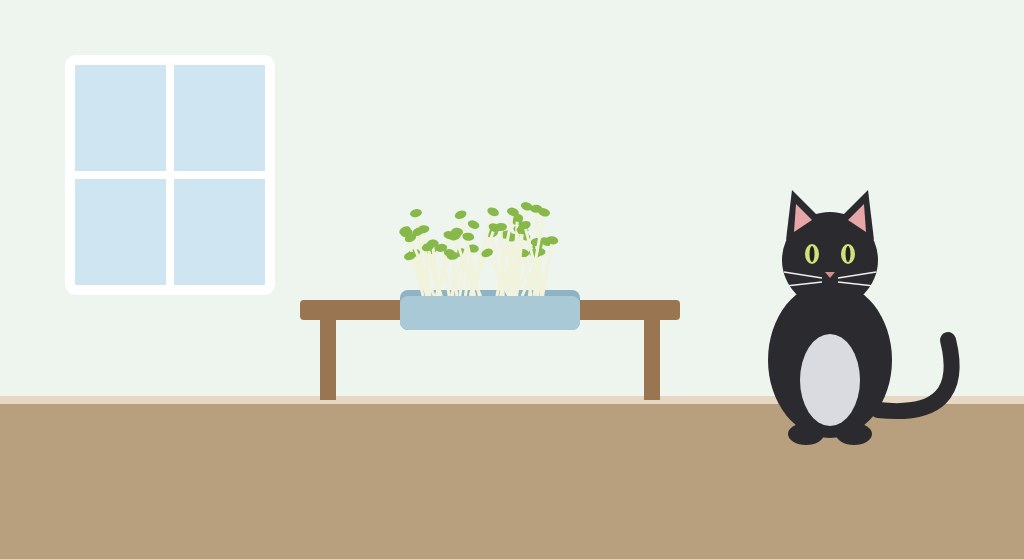
Can cats eat alfalfa sprouts? They are not a good choice for cats. A nibble of plain sprouts is not known to be toxic, but cats are obligate carnivores with no need for them, and raw sprouts carry a food safety risk: the FDA says they can harbor “Salmonella, Listeria, and E. coli.” The ASPCA adds that any plant material “may cause vomiting and gastrointestinal upset for dogs and cats.” If your cat ate sprouts from a dish with onion, garlic or dressing, or is vomiting, has diarrhea or is hiding, call your veterinarian, the ASPCA Animal Poison Control Center at (888) 426-4435 or the Pet Poison Helpline at (855) 764-7661 (24/7, a fee may apply).
This page is general information from a pet parent who reads veterinary sources, not a veterinarian.
Is Alfalfa Sprouts Safe for Cats? What the Sources Say
We did not find a veterinary toxicology source listing alfalfa sprouts as a poison for cats, and we did not find one recommending them. Here is what the sources we read do say, and how it applies.
Cats do not need plants. The Cornell Feline Health Center explains that “cats are obligate carnivores, which means that they rely on nutrients found only in animal products.” Sprouts add nothing a complete cat food does not already provide.
Raw sprouts are a bacteria risk. The FDA says sprouts grow “under warm and humid conditions,” which are also ideal for bacteria, and that a few bacteria on a seed can “grow to high levels during sprouting.” The CDC’s December 2022 notice on a Salmonella outbreak linked to alfalfa sprouts counted 63 people sick and 10 hospitalized across 8 states.
Those bacteria matter for pets. The ASPCA says Salmonella and E. coli “can be harmful to pets and humans alike.”
Is Alfalfa Sprouts Toxic to Cats?
Not in the way lilies, onions or permethrin are toxic to cats. The risk is closer to that of raw food: what might be growing on the sprout, plus the stomach upset any unusual plant can cause.
The bigger danger is usually what the sprouts came with. Cats tend to get sprouts by stealing from a plate, and the plate often has onion, garlic or a seasoned dressing on it. Onion and garlic are a serious problem for cats in any form; if they were in the mix, go to cat ate onion or garlic now.
Why Cats Nibble Sprouts at All
Plenty of cats like to chew fine, grassy greens. A tray of sprouts on a counter looks and feels a lot like a pot of cat grass, and some cats will graze on it. That is a texture and behavior thing, not hunger.
If your cat enjoys grazing, cat grass grown for the purpose is the better outlet. Our page is cat grass safe covers what it is and how to offer it. Keep home sprouting jars and trays where your cat cannot reach them.
My Cat Ate Alfalfa Sprouts: What Should I Do?
- Check what else was on the plate. Onion, garlic, chives, leeks, dressings and seasonings are the urgent ones.
- If any of those were involved, call now.
- If it was a few plain sprouts and your cat is acting normally, remove the rest and watch for vomiting, diarrhea, poor appetite or hiding over the next few days.
- Call your vet if signs appear, if diarrhea is bloody, or if your cat is a kitten, a senior or has a health condition.
- Do not try to make your cat vomit. There is no safe home method. See what to do when a cat may be poisoned.
Cats hide illness. A cat who goes under the bed after eating something new deserves a closer look; see cat hiding after eating something.
Can Kittens Eat Alfalfa Sprouts?
Better not. Kittens have developing immune systems and dehydrate faster when vomiting or diarrhea starts. The FDA advises that children, older adults, pregnant women and people with weakened immune systems avoid raw sprouts; that guidance is written for people, but the reasoning about young bodies carries over sensibly. Kittens need a complete kitten food, nothing extra.
How Much Is Too Much?
We do not publish amounts on this site. With sprouts, the question is not mainly quantity: one contaminated serving can make a cat ill, while a few clean strands probably do nothing. Cornell’s general rule is that treats should not exceed “10 to 15 percent of a cat’s daily caloric intake,” and sprouts are not a useful way to spend that budget.
If You Sprout Seeds at Home
- Keep jars and trays out of the cat’s reach, and covered.
- Wash your hands after handling raw sprouts and before preparing your cat’s food.
- Do not use the same bowls for sprouting and for pet food.
- If anyone in your home is in a higher-risk group, the FDA advice is to avoid raw sprouts altogether.
If you have a dog too, see can dogs eat alfalfa sprouts. For another common plant question, see my cat chewed a houseplant.
Sources Checked
On October 27, 2026 we read the FDA page Selecting and Serving Produce Safely, for the quoted statements on sprouts, bacteria and higher-risk groups; the CDC notice Salmonella Outbreak Linked to Alfalfa Sprouts (December 2022), for the outbreak figures; the ASPCA page People Foods to Avoid Feeding Your Pets, for the statement on Salmonella and E. coli; the ASPCA toxic and non-toxic plants pages, for the general statement on plant material; and the Cornell Feline Health Center page Feeding Your Cat, for the obligate carnivore definition and the treat guideline. This article publishes no dose, threshold or safe amount.
Frequently Asked Questions
Can cats eat alfalfa sprouts?
A nibble of plain sprouts is not known to be toxic, but cats do not need them and raw sprouts can carry Salmonella, Listeria and E. coli. It is best to keep them away.
Are alfalfa sprouts like cat grass?
They look similar and some cats graze on both, but cat grass is grown for the purpose. Offer that instead.
My cat ate sprouts from my salad. What now?
Check the salad for onion, garlic and dressing. If they were in it, call now. If not, watch your cat and call if any signs appear.
Can kittens have alfalfa sprouts?
No. Kittens are more vulnerable to bacterial illness and dehydration.
This article is general information and does not replace veterinary care. If your cat is unwell after eating sprouts or anything else, contact your veterinarian, the ASPCA Animal Poison Control Center at (888) 426-4435, or the Pet Poison Helpline at (855) 764-7661.