
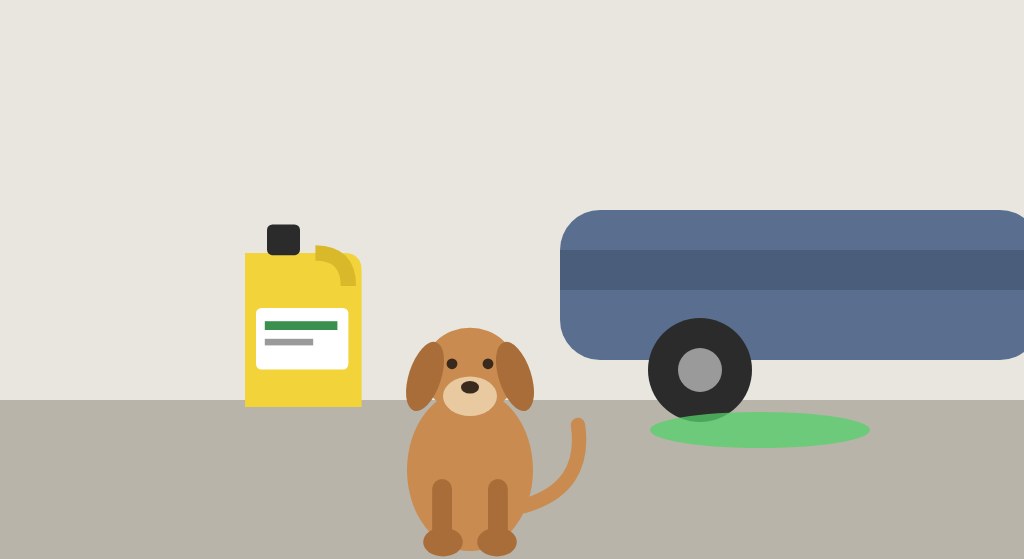
If your dog or cat may have licked or drunk antifreeze, treat it as an emergency and go now. Call your veterinarian, the nearest 24-hour emergency animal hospital, the ASPCA Animal Poison Control Center at (888) 426-4435 or the Pet Poison Helpline at (855) 764-7661 on the way (both US, 24/7, a fee may apply). Do not wait for signs. The Merck Veterinary Manual states that “prognosis varies inversely with the amount of time that elapses between ingestion and initiation of treatment,” and that once kidney failure sets in, the outlook is “guarded to poor.”
This page is general information from a pet parent who reads veterinary sources, not a veterinarian. It is here so your call to a professional is faster and better informed, not to replace it.
Is Antifreeze Safe for Pets? The Short Answer
No. Most traditional antifreeze contains ethylene glycol, and ethylene glycol poisoning is one of the most dangerous exposures a dog or cat can have. Merck notes that “all species are susceptible,” but “dogs and cats are most commonly affected.” The poison is not the ethylene glycol itself so much as what the liver turns it into, and those breakdown products injure the kidneys. The treatment that blocks that process works best very early, which is why minutes and hours matter here more than with almost any other household poison.
Why Pets Drink Antifreeze
Merck lists the “sweet taste” of antifreeze as one reason exposures are common. It notes that manufacturers have added a bittering agent since 2012, but that some animals may still find the products palatable. In practice, pets find antifreeze:
- In puddles under a parked car or in a driveway after a radiator leak
- In drip pans and open containers in garages
- During radiator flushes or top-ups, when a cap is left off or fluid is spilled
- In winterized plumbing, toilets and RVs where antifreeze has been poured
- From containers chewed open by a dog
Merck also names other sources besides radiator antifreeze, including some heat-exchange fluids and brake and transmission fluids. And it warns that topical products containing ethylene glycol can poison cats through the skin.
Is Antifreeze Safe for Dogs?
No. Dogs are the pet most often involved, because they drink from puddles and investigate garages. A dog that licked a spill, drank from a puddle under a car, or chewed a jug may have taken in a dangerous amount without you seeing much missing.
The trap with dogs is the middle phase. After the first hours, a dog may seem to recover, and an owner reasonably decides it is over. Meanwhile, the kidney damage is developing. If there is any chance your dog had antifreeze, the call happens before signs, not after.
Is Antifreeze Safe for Cats?
No, and cats are especially vulnerable. They are small, so a lick is a larger exposure relative to body size, and they groom off anything on their paws or fur. A cat that walks through a spill in the garage and then cleans its feet has swallowed antifreeze. Merck’s note about skin absorption from topical products also applies to cats.
Cats hide illness, so early signs are easy to miss. A cat that is wobbly, drooling, vomiting or hiding after time in a garage or driveway should be seen.
My Dog Licked Antifreeze: What Do I Do?
- Go now. Head to your vet or the nearest emergency hospital and call on the way.
- Bring the container, or a photo of the label, so the vet knows whether it is ethylene glycol or another product.
- Do not wait for vomiting or wobbliness. Merck states that “treatment requires early intervention.”
- Do not induce vomiting on your own judgment. Let the vet decide. See should I make my dog throw up.
- Wash any antifreeze off fur and paws with mild soap and water if it will not delay you, so grooming does not add to the exposure.
- Keep other pets away from the spill and clean it up once everyone is safe.
Our checklist of what to bring to the emergency vet is worth a quick look on the way out.
Signs of Antifreeze Poisoning in Dogs
Merck describes early signs within hours that “resemble alcohol intoxication,” with vomiting and depression of the nervous system. In everyday terms, watch for:
- Wobbliness, stumbling or a “drunk” walk
- Vomiting
- Drinking and urinating more than usual
- Lethargy or depression
Later, as the kidneys are injured, signs can include not eating, vomiting, weakness, very little or no urine, and collapse. Merck notes that reduced urine output comes before no urine output, and that by that stage “almost all of the ethylene glycol has already been metabolized.”
Signs of Antifreeze Poisoning in Cats
The pattern is similar in cats: an early phase of wobbliness, vomiting and depression, followed by kidney injury. Merck places the kidney phase at roughly 12 to 72 hours depending on species. In cats, watch especially for hiding, drooling, a wobbly walk, vomiting, refusing food and producing little urine in the litter box. See signs of poisoning in cats.
How Long After Drinking Antifreeze Will a Pet Get Sick?
| Phase | Timing (from Merck) | What you may see |
|---|---|---|
| Early | Within hours | Signs resembling alcohol intoxication: wobbliness, vomiting, depression |
| Apparent recovery | After the early phase | A pet that seems better, while kidney damage develops |
| Kidney injury | Roughly 12 to 72 hours, depending on species | Not eating, vomiting, weakness, little or no urine, collapse |
The treatment window sits in the first phase. That is the whole reason this page tells you to go before signs appear.
How Much Antifreeze Will Hurt a Dog or Cat?
This site does not publish toxic amounts for anything, and antifreeze is the clearest example of why. Owners almost never know how much a pet drank from a puddle or licked off a paw, and with ethylene glycol a small volume can be serious, especially in a cat or small dog. The only useful amount to act on is “any.” Call and go.
Antifreeze Poisoning Treatment: What the Vet Does
We do not describe drug doses. In general terms, Merck describes treatment built around IV fluids and supportive care, plus drugs that block the enzyme that converts ethylene glycol into its toxic breakdown products. It names fomepizole and ethanol as the main options. The catch is timing: once urine output drops, blocking the enzyme offers little benefit because the conversion has already happened. Our page on what the vet does for dog poisoning explains the general approach to a poisoning visit.
Recovery and Outlook
Merck is direct about this: the condition can “progress to irreversible acute kidney failure,” and for pets that reach the stage of low or no urine output, “the prognosis for these patients is guarded to poor.” Pets treated early, before the kidney phase, have a much better chance. Expect your vet to want follow-up blood work to check kidney function after treatment.
Pet-Safe Alternatives to Antifreeze
A car or plumbing system that needs antifreeze still needs it, so the alternative is about handling rather than doing without:
- Read the label and choose products sold as lower toxicity where they suit your vehicle. Lower toxicity is not no toxicity; handle every antifreeze the same careful way.
- Check under parked cars for puddles and fix leaks promptly.
- Clean spills immediately with absorbent material, bag it, and rinse the area with water. Keep pets indoors until it is done.
- Store antifreeze in its original, tightly closed container on a high shelf or in a locked cabinet.
- Dispose of old coolant through an auto shop or hazardous waste collection, never in a drain or on the ground.
- Keep pets out of the garage during radiator work and while winterizing plumbing or RVs.
- Check toilets and pipes in winterized cabins before letting pets drink.
Sources Checked
On October 28, 2026 we read the Merck Veterinary Manual page Ethylene Glycol Toxicosis in Animals (full review January 2022, last updated September 2024), for sources of ethylene glycol, the sweet taste and bittering agents, species affected, skin absorption in cats, the phases and timing of signs, the quoted statements on early intervention, prognosis and irreversible kidney failure, and the general treatment approach. This article publishes no dose, threshold or safe amount.
Frequently Asked Questions
Is antifreeze safe for pets?
No. Ethylene glycol antifreeze can cause irreversible kidney failure in dogs and cats. Any exposure is an emergency.
How long after drinking antifreeze will a dog get sick?
Early signs like wobbliness and vomiting appear within hours. Kidney injury follows at roughly 12 to 72 hours, according to Merck.
My dog licked antifreeze but seems fine. Can I wait?
No. Pets can seem to recover while kidney damage develops. Treatment works best early.
Is antifreeze poisoning in cats treatable?
Yes, if treated early. Once kidney failure develops, Merck describes the prognosis as guarded to poor.
Is pet-safe antifreeze really safe?
Products sold as lower toxicity are less dangerous, not harmless. Store, use and clean up all antifreeze carefully.
This article is general information and does not replace veterinary care. If your pet may have had any contact with antifreeze, contact your veterinarian, the ASPCA Animal Poison Control Center at (888) 426-4435, or the Pet Poison Helpline at (855) 764-7661. Only a veterinarian who examines your pet can tell you what an exposure means for them.