
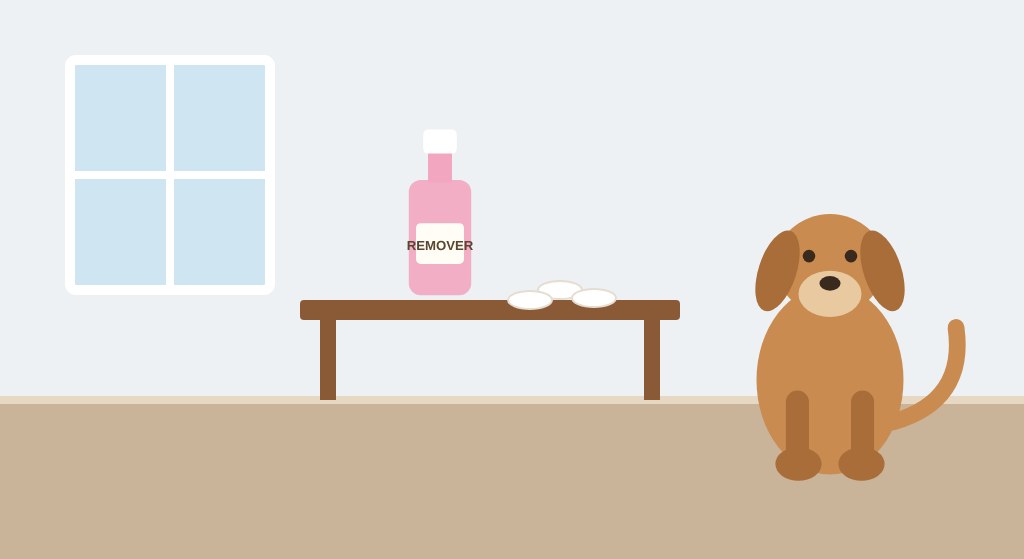
Is acetone safe for pets? No. Acetone, the solvent in most nail polish removers, is not something a dog or cat should lick, drink, breathe in heavily or have on their fur. A small lick usually causes no more than an upset stomach, but a larger amount, a soaked cotton pad, or fumes in a small closed room can cause drooling, vomiting, wobbliness and drowsiness. If your pet drank acetone, chewed the bottle, or is vomiting, wobbly or unusually sleepy, call your veterinarian, the nearest 24-hour emergency animal hospital, the ASPCA Animal Poison Control Center at (888) 426-4435 or the Pet Poison Helpline at (855) 764-7661 (both US, 24/7, a fee may apply). Do not make your pet vomit unless a professional tells you to.
This page is general information from a pet parent who reads veterinary sources, not a veterinarian. It is here so your call to a professional is faster and better informed, not to replace it.
What Acetone Is and Where Pets Find It
The Northern New England Poison Center describes acetone as “a clear, flammable chemical most commonly found in nail polish remover.” It is also used in some paint thinners, glue removers, cleaning solvents and craft supplies. Its strong smell is what draws a curious dog’s nose, and its quick evaporation is what fills a small bathroom with fumes.
The realistic ways a pet meets acetone at home are:
- Used cotton pads and balls left on a counter or in an open bathroom bin. Dogs in particular raid bins and chew them.
- Knocked-over bottles, especially the pump-top dispensers that sit open on a vanity.
- Wet fingernails or toenails on a person who then pets or plays with an animal.
- Spills on the floor that a pet walks through and later licks off its paws.
- Fumes in a small, closed room where nails are being done, especially with a cat or small dog shut in.
- Chewed bottles, which add a plastic and choking problem to the chemical one.
What Acetone Does
Veterinary references say little that is specific to acetone in pets, so we will be honest about where the information comes from. The poison center guidance written for people describes what happens after a larger exposure: “If you swallow more than a mouthful or if you breathe in a lot of acetone, you may” get headache, dizziness, nausea or vomiting, trouble breathing, a fast heartbeat and passing out. It adds that a smaller amount “may” just cause “an upset stomach,” and that it can make you feel “like you drank too much alcohol.”
A dog or cat is much smaller than a person, so a “mouthful” for a pet is a different scale. The pattern to expect is the same, though:
- Mouth and stomach: drooling, lip licking, foaming, vomiting.
- Nervous system: wobbliness, disorientation, unusual sleepiness, which looks a lot like a pet that got into alcohol.
- Breathing: coughing, fast breathing or trouble breathing, especially after fumes or if liquid was inhaled while vomiting.
- Eyes and skin: the poison center notes that acetone in the eyes makes them “water, turn red and burn.” On skin it is drying and irritating.
Is Acetone Safe for Dogs?
Dogs are the ones most likely to swallow acetone, because they chew cotton pads, tip bottles and investigate strong smells with their mouths. The concerns for a dog are the amount swallowed, whether it inhaled any while vomiting, and its size. A large dog that licked a damp pad is a very different case from a small dog that chewed a soaked one.
A chewed bottle adds a separate problem: pieces of plastic and a cap can cause choking or a blockage. If your dog chewed the container, mention it on the phone. Our page on whether a swallowed object is a blockage covers the signs.
Is Acetone Safe for Cats?
Cats rarely drink chemicals, but they groom off anything that ends up on their fur or paws. A cat that walks through a spill, brushes against a wet surface or sits on a used pad will lick acetone off itself. Cats are also small, and a closed bathroom full of fumes is a bigger exposure for a 4 kg cat than for the person doing their nails.
Signs in a cat can be quiet: drooling, pawing at the mouth, hiding, a wobbly walk or unusual sleepiness. Cats hide discomfort, so a cat that goes under the bed after an exposure is worth taking seriously. Our page on a cat hiding after eating something explains why.
My Dog Licked Acetone: What Should I Do?
- Move your pet away from the spill or pads, and into fresh air if the room smells strongly.
- Wipe the mouth and face gently with a damp cloth. If acetone is on the fur or paws, wash it off with mild soap and lots of water so grooming does not continue the exposure.
- If acetone got in the eyes, rinse gently with plain lukewarm water and call.
- Check the label. Some removers contain other solvents, oils or fragrance. Have the bottle in hand when you call.
- Call your vet or a poison line if your pet swallowed more than a lick, chewed a pad or the bottle, or shows any signs. Say how much is missing and when it happened.
- Do not induce vomiting. A pet that is drowsy can breathe vomit into the lungs, and solvents are especially risky in the airway. See should I make my dog throw up.
- Do not give milk, oil or food to “dilute” it unless you are told to.
If you are told to come in, our checklist of what to bring to the emergency vet helps.
Signs That Mean Go In Now
- Repeated vomiting
- Stumbling, inability to stand, or a pet that is hard to wake
- Coughing, gagging or labored breathing, especially after vomiting
- Collapse or seizures
- Red, swollen or painful eyes that do not settle after rinsing
Why Small Amounts Still Get a Call
This site does not publish toxic amounts or safe amounts for anything. With acetone, the trouble with “only a little” is that owners rarely know how much was on a pad, how much evaporated and how much went down. A poison line can weigh your pet’s size, the product and the timing in a few minutes, and they are used to working with “I am not sure how much.”
Pet-Safe Alternatives to Using Acetone
There is no such thing as a solvent that is safe to swallow, so the goal is to change the habits around nail polish removal rather than look for a “pet-safe acetone.” What helps most:
- Do your nails with the door open and a window cracked, and keep pets out of the room until the smell clears.
- Use a remover with a closed cap, not an open pump dispenser, and put it away immediately.
- Throw used pads into a lidded bin or straight outside. Open bathroom bins are the most common source of exposures.
- Let nails dry fully before handling your pet.
- Wipe up spills right away with paper towels and bag them.
- Store all solvents high and closed, together with paint thinners and glue removers.
“Acetone-free” removers use other solvents. They are not a reason to relax the habits above, because they are still chemicals your pet should not swallow.
Related Household Chemicals
If your pet got into cleaning products rather than nail polish remover, see dog licked a cleaning product. If you are not sure what your pet got into, start with dog ate an unknown substance.
Sources Checked
On October 28, 2026 we read the Northern New England Poison Center page Acetone, for what acetone is, where it is found, the quoted effects of swallowing or inhaling larger and smaller amounts, eye exposure, and the advice to keep acetone products away from children and pets. That page is written for people; we found no veterinary toxicology page dedicated to acetone in pets and say so rather than invent one. This article publishes no dose, threshold or safe amount.
Frequently Asked Questions
Is acetone safe for pets?
No. It is a solvent that can cause vomiting, drowsiness, wobbliness and breathing problems after larger exposures. Small licks usually cause stomach upset only, but call if you are unsure.
My dog licked nail polish remover. What do I do?
Wipe the mouth, move your dog to fresh air, check the label and call your vet or a poison line. Do not make your dog vomit.
Are acetone fumes dangerous to cats?
Strong fumes in a small closed room can affect a small cat. Ventilate and keep cats out of the room while you use it.
My dog chewed a used cotton pad. Is that serious?
Call. There is the acetone on the pad and the pad itself, which can cause a blockage in a small dog.
Is acetone-free nail polish remover safe for dogs?
No remover is safe to swallow. Use the same storage and disposal habits.
This article is general information and does not replace veterinary care. If your pet has swallowed, inhaled or been covered in acetone, contact your veterinarian, the ASPCA Animal Poison Control Center at (888) 426-4435, or the Pet Poison Helpline at (855) 764-7661. Only a veterinarian who examines your pet can tell you what an exposure means for them.