
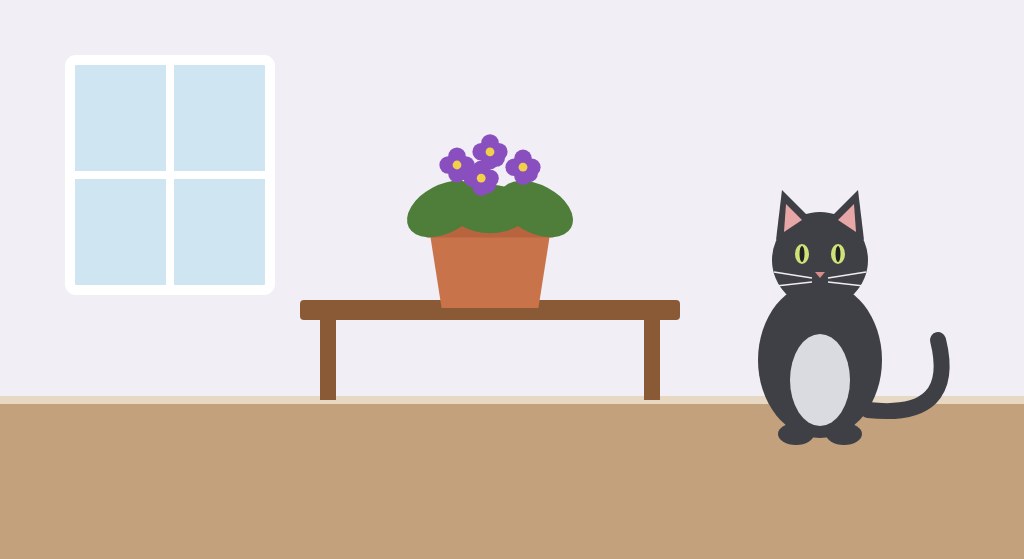
Are African violets toxic to cats? No. The ASPCA Animal Poison Control Center lists African violet (Saintpaulia species, family Gesneriaceae) as “Non-Toxic to Dogs, Non-Toxic to Cats, Non-Toxic to Horses.” A cat that nibbles a leaf may still vomit or have a soft stool, because the ASPCA notes that eating any plant material can upset a cat’s stomach, and the bigger risks are usually what is on or around the plant: fertilizer, systemic insecticide, or a pot that falls. If your cat ate a plant you cannot identify for certain, or is vomiting repeatedly, drooling or hiding, call your veterinarian, the nearest 24-hour emergency animal hospital, the ASPCA Animal Poison Control Center at (888) 426-4435 or the Pet Poison Helpline at (855) 764-7661 (both US, 24/7, a fee may apply).
This page is general information from a cat parent who reads veterinary sources, not a veterinarian. It is here so your call to a professional is faster and better informed, not to replace it.
What the ASPCA Says About African Violets
The ASPCA’s plant database is the reference most veterinarians and poison lines start from. Its African violet entry gives:
- Scientific name: Saintpaulia spp.
- Family: Gesneriaceae
- Toxicity: “Non-Toxic to Dogs, Non-Toxic to Cats, Non-Toxic to Horses”
The ASPCA also keeps a separate entry under the name Usambara violet, which is another common name for the same group of plants, and it is listed as non-toxic as well.
That makes African violets one of the houseplants you can keep in a home with cats without worrying about a specific plant toxin, which is not true of many popular houseplants. Lilies, for example, can cause kidney failure in cats; see are all lilies toxic to cats.
Is African Violet Safe for Cats to Chew?
“Non-toxic” means the plant does not contain a known poison that causes a specific illness. It does not mean a cat can eat it without consequence. The ASPCA’s own plant pages carry a general note that “consumption of any plant material may cause vomiting and gastrointestinal upset for dogs and cats.”
African violet leaves are fuzzy and fleshy, and some cats like the texture. A cat that chews a leaf or two may vomit it back up, especially a cat that eats quickly or is prone to hairballs. That is a nuisance, not a poisoning. Repeated vomiting, vomiting with lethargy, or a cat that stops eating is a reason to call, whatever the plant.
The Real Risks Around a Potted African Violet
When an African violet causes trouble for a cat, it is usually because of something other than the plant itself:
- Fertilizer. African violets are often fed with liquid or granular fertilizers, and “violet food” sits next to the pot. Fertilizer in soil, drip trays or the bottle can upset a cat’s stomach. Store it closed and away from the plant shelf.
- Systemic insecticides. Some potted plants are sold pre-treated, and some owners use systemic granules against mealybugs or thrips. Read the plant tag and any product you add to the soil.
- Leaf shine and sprays. Leaf polish and pest sprays are not plant material. If your cat licked a sprayed leaf, read the product label and call if unsure.
- Soil and perlite. Some cats dig in or eat potting mix. Small amounts usually pass, but large amounts can upset the stomach.
- Falling pots. Violets are often kept on windowsills, which cats love. A ceramic pot knocked off a sill can injure a cat or leave broken pieces.
- Mistaken identity. The safety rating only applies if the plant really is an African violet. Many plants are sold with “violet” in the name. If the plant tag is gone and you are not sure, treat the plant as unknown.
My Cat Ate African Violets: What Do I Do?
- Confirm the plant. Check the tag or the pot label. If you are certain it is Saintpaulia, the plant itself is not a poisoning concern.
- Check what else was involved. Fertilizer in the soil, a recent pest treatment, or leaf spray changes the picture. Have those labels ready.
- Remove leaf pieces from your cat’s mouth if they are easy to reach, and offer fresh water.
- Watch for 24 hours. A single vomit is not unusual. Call your vet if your cat vomits repeatedly, drools heavily, hides, refuses food, or seems weak.
- Do not induce vomiting. There is no reason to for a non-toxic plant, and home methods are not safe in cats. See what to do when a cat may be poisoned.
If you are not sure what your cat chewed, our page my cat chewed a houseplant walks through identifying the plant and what to tell a poison line.
How to Keep Cats Away From African Violets
Even a non-toxic plant does not do well with a cat chewing it. African violets are slow-growing and the fuzzy leaves bruise easily. Ways to protect both:
- Give your cat a better option. Many cats chew plants because they like grazing on greens. A pot of cat grass in a place your cat is allowed to go often draws attention away from other plants. See is cat grass safe.
- Use height and enclosures. A plant stand away from jumping surfaces, a glass cloche, or a terrarium-style display protects violets well; they like humidity anyway.
- Make the windowsill less interesting. Cats sit on sills for the view and the sun. A dedicated window perch elsewhere can move the cat away from the plants.
- Cover the soil with a layer of decorative stones if your cat digs.
- Avoid repellent sprays made with essential oils or citrus oils on plants a cat can reach. Many essential oils are a bigger problem for cats than the plant ever was.
Are African Violets Safe for Dogs Too?
Yes. The ASPCA lists African violet as non-toxic to dogs as well. The same caution applies: dogs that eat a lot of any plant can vomit, and fertilizer or pesticide in the pot is the bigger concern. Dogs are also more likely than cats to eat the soil or chew the pot.
Building a Cat-Safe Plant Collection
African violets are a good choice for cat households because they are listed as non-toxic and they stay small. Before adding any new plant, look up its scientific name in the ASPCA database rather than relying on a common name, and keep the plant tag. Our guide how toxic is this plant to my pet explains how to read toxicity ratings and what “toxic” can mean in practice.
Sources Checked
On October 28, 2026 we read the ASPCA Animal Poison Control Center entry for African violet, for the scientific name, family and the quoted toxicity listing; the ASPCA entry for Usambara violet; and the ASPCA toxic and non-toxic plants pages, for the quoted general statement on plant material and stomach upset. This article publishes no dose, threshold or safe amount.
Frequently Asked Questions
Are African violets toxic to cats?
No. The ASPCA lists African violet (Saintpaulia) as non-toxic to cats, dogs and horses.
Why did my cat vomit after eating an African violet?
Eating any plant material can upset a cat’s stomach, according to the ASPCA. Call your vet if vomiting repeats or your cat seems unwell.
Is African violet fertilizer safe for cats?
Fertilizer is not plant material and can upset a cat’s stomach. Store it closed and call if your cat got into it.
Are Usambara violets the same as African violets?
Yes, Usambara violet is another common name, and the ASPCA lists it as non-toxic too.
Are African violets safe for kittens?
The plant is non-toxic, but kittens chew more and have smaller stomachs. Keep pots out of reach and offer cat grass instead.
This article is general information and does not replace veterinary care. If your cat ate a plant you cannot identify, or is unwell after chewing a plant, contact your veterinarian, the ASPCA Animal Poison Control Center at (888) 426-4435, or the Pet Poison Helpline at (855) 764-7661. Only a veterinarian who examines your cat can tell you what an exposure means for them.