
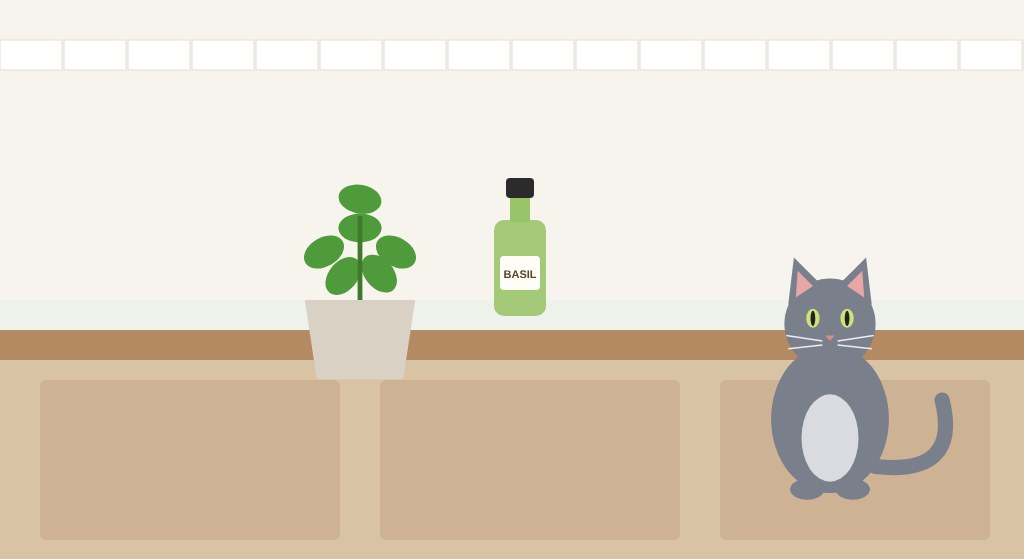
Is basil oil safe for cats? Basil essential oil is not a safe thing to put on, near or in a cat, even though the basil plant itself is listed as non-toxic. The ASPCA lists basil (Ocimum basilicum) as “Non-Toxic to Dogs” and “Non-Toxic to Cats,” but an essential oil is a concentrated extract, and the Merck Veterinary Manual warns that “the higher the concentration of essential oil, the greater the risk to the animal.” Cats are the most sensitive. If your cat or dog licked basil oil, got it on the fur, or is drooling, vomiting, wobbly or breathing hard after diffuser use, call your veterinarian, the nearest 24-hour emergency animal hospital, the ASPCA Animal Poison Control Center at (888) 426-4435 or the Pet Poison Helpline at (855) 764-7661 (both US, 24/7, a fee may apply).
This page is general information from a pet parent who reads veterinary sources, not a veterinarian. It is here so your call to a professional is faster and better informed, not to replace it.
The Plant and the Oil Are Not the Same Thing
This is where most of the confusion comes from. A few leaves of fresh basil that a cat chews from a kitchen pot are a very different exposure from a few drops of basil essential oil.
The ASPCA’s plant entry covers the plant: Ocimum basilicum, family Lamiaceae, non-toxic to dogs and cats. A cat or dog nibbling the herb may still have a mild stomach upset, as with any plant, but there is no known basil toxin to worry about.
An essential oil is something else. It concentrates the plant’s aromatic compounds many times over into a small bottle. Merck explains that essential oils are “readily and rapidly absorbed through the GI tract, skin, lungs, and mucous membranes,” and that the risk rises with concentration. A plant being safe tells you very little about whether its oil is.
Is Basil Oil Toxic to Cats?
Basil oil is not one of the oils Merck or VCA Animal Hospitals name specifically. Merck’s named lists are oils known to damage the liver (birch tar, cassia bark, cinnamon, pennyroyal, tea tree) and oils that can cause seizures (birch, cedar, eucalyptus, hyssop, pennyroyal, sage, wintergreen, wormwood). VCA’s list of oils toxic to cats includes cinnamon, citrus, pennyroyal, peppermint, pine, sweet birch, tea tree, wintergreen and ylang ylang.
Basil’s absence from those lists does not make it safe for cats. It means it has not been singled out. The general warning applies to every essential oil, because of how cats are built. Merck states that “cats are more sensitive because they are deficient in the enzyme glucuronyl transferase,” which the liver uses to process many aromatic compounds. Cats also groom off anything that lands on their coat. So the practical answer to “is basil oil toxic to cats” is: treat it like any concentrated essential oil, which means keep it off and away from your cat.
Is Basil Oil Safe for Dogs?
Dogs handle essential oils better than cats do, but concentrated oils are still not safe to swallow or apply undiluted. Merck says concentrated oils should never be applied directly to pets, and that “the most common signs from ingestion or dermal exposure include vomiting, lethargy, drooling, ataxia, and anorexia.” Dogs are the more likely pet to chew a bottle or lick a spill, so storage matters most with dogs.
Small dogs, puppies, older dogs and dogs with liver disease or breathing problems are the ones to be most careful with.
Can I Diffuse Basil Oil Around My Cat?
It is best not to diffuse essential oils in rooms your cat uses. Merck draws a distinction between diffuser types:
- Passive diffusers (reeds, pads, plug-ins that warm oil) mainly cause respiratory irritation, unless a cat knocks one over and gets the oil on its fur or in its mouth.
- Active diffusers (ultrasonic and nebulizing models) “emit microdroplets” that can settle on fur, which a cat then swallows while grooming.
Merck lists the signs from inhaling diffused oils as watery eyes, runny nose, nausea, drooling, vomiting, difficulty breathing, fast breathing, coughing or wheezing. Cats with asthma, and birds, are at higher risk. If you choose to diffuse anything, keep it out of the cat’s areas, use it briefly, keep a door open so the cat can leave, and stop at the first sign of coughing or drooling. Our guide to essential oil diffusers and cat safety explains more.
Can I Diffuse Basil Oil Around My Dog?
Dogs are less sensitive than cats, but the same principles apply: use diluted products, short sessions, good ventilation, and a room the dog can leave. Stop if your dog coughs, sneezes repeatedly, drools or seems uncomfortable. Never let a dog near the open bottle or the diffuser reservoir.
Common Ways Pets Are Exposed to Basil Oil
- A bottle knocked off a shelf and spilled on the floor
- A diffuser tipped over, soaking a cat’s fur
- Oil applied to a person’s skin, then licked off by a pet
- Homemade sprays, cleaners or “natural” flea remedies containing basil oil
- Massage oils and aromatherapy blends left within reach
What to Do if Your Pet Got Into Basil Oil
- Move your pet to fresh air if a diffuser or spill is involved.
- Wash oil off the skin and fur. VCA advises washing with liquid dishwashing detergent and rinsing well. Merck also recommends decontamination by bathing or fresh air.
- Do not induce vomiting. Merck warns against it because of the risk of breathing oil into the lungs. See should I make my dog throw up.
- Do not give activated charcoal at home. VCA notes it “may worsen your cat’s condition.”
- Seal the bottle and bring it, or a photo of the label, so the vet knows the product and concentration.
- Call your vet or a poison line, especially for cats, for any swallowed oil, and for any signs.
Signs of Essential Oil Poisoning
From Merck and VCA together, signs to watch for include:
- Fragrance on the coat, skin or breath
- Drooling, vomiting, pawing at the mouth
- Wobbliness, weakness, lethargy, muscle tremors
- Coughing, wheezing, fast or difficult breathing
- Redness or burns on the lips, gums, tongue or skin
- In serious cases, low body temperature, seizures, and liver or kidney damage
See signs of poisoning in cats for more.
Basil Oil Safety Checklist
| Situation | Cats | Dogs |
|---|---|---|
| Fresh basil plant in the kitchen | Listed non-toxic; mild upset possible | Listed non-toxic; mild upset possible |
| Food cooked with basil | Check the rest of the dish for onion and garlic | Check the rest of the dish for onion and garlic |
| Basil essential oil on skin or fur | Avoid; wash off and call | Avoid undiluted; wash off and call if swallowed |
| Diffusing basil oil | Avoid in cat areas | Brief, ventilated, dog can leave |
| Swallowed basil oil | Call now | Call now |
Basil dishes often contain onion or garlic, which are a separate problem; see cat ate onion or garlic and is garlic bad for dogs.
Sources Checked
On October 28, 2026 we read the ASPCA Animal Poison Control Center entry for basil, for the scientific name, family and toxicity listing; the Merck Veterinary Manual page Toxicoses From Essential Oils in Animals (last updated March 2025), for absorption routes, concentration, cat enzyme sensitivity, diffuser types, named oils, signs, decontamination and the warning against inducing vomiting; and VCA Animal Hospitals’ Essential Oil and Liquid Potpourri Poisoning in Cats by Renee Schmid, DVM, DABT, DABVT, Ahna Brutlag, DVM, MS, DABT, DABVT, and Charlotte Flint, DVM, for the list of oils toxic to cats, signs, washing advice and the charcoal warning. Neither Merck nor VCA names basil oil specifically, and we say so. This article publishes no dose, threshold or safe amount.
Frequently Asked Questions
Is basil oil safe for cats?
No. The basil plant is non-toxic, but basil essential oil is concentrated, and cats are especially sensitive to essential oils.
Is basil oil safe for dogs?
Not undiluted or swallowed. Dogs are less sensitive than cats, but concentrated oils can cause vomiting, drooling and wobbliness.
Can I diffuse basil oil around my dog?
Use only brief, ventilated sessions in a room your dog can leave, and stop if your dog coughs or drools.
My cat ate fresh basil leaves. Is that OK?
The ASPCA lists the basil plant as non-toxic to cats. A mild stomach upset is possible.
Is basil oil the same as the basil plant for pet safety?
No. The oil is a concentrated extract and carries far more risk than the leaves.
This article is general information and does not replace veterinary care. If your pet swallowed basil oil or any essential oil, or is unwell after diffuser use, contact your veterinarian, the ASPCA Animal Poison Control Center at (888) 426-4435, or the Pet Poison Helpline at (855) 764-7661. Only a veterinarian who examines your pet can tell you what an exposure means for them.