
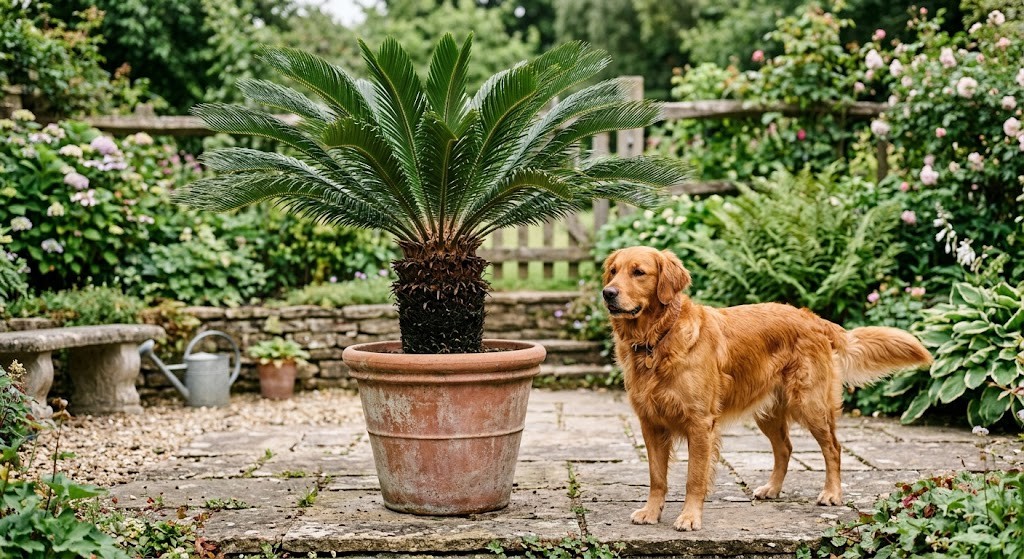
Yes, sago palm is toxic to dogs, and veterinary sources treat any bite as an emergency. The ASPCA lists sago palm (Cycas revoluta and Zamia species) as toxic to dogs, cats and horses, with signs that run from vomiting to liver failure and death. The Merck Veterinary Manual states that all parts are toxic and the seeds are the most toxic part. If your dog has chewed any part of a sago palm, call your vet, the ASPCA Animal Poison Control Center (888-426-4435) or the Pet Poison Helpline (855-764-7661) now, even if your dog looks fine.
If Your Dog Ate Sago Palm: What to Do Right Now
- Call now, before reading further. Phone your veterinarian, the nearest 24-hour emergency animal hospital, the ASPCA Animal Poison Control Center at 888-426-4435, or the Pet Poison Helpline at 855-764-7661. Both poison lines answer 24 hours a day, and a consultation fee may apply.
- Do not make your dog vomit and do not give any home treatment, food, milk or medicine, unless a veterinarian or poison-control specialist tells you to for this exposure, at this moment. Our guide on whether you should make your dog throw up explains why that call belongs to the professionals.
- Do not wait for signs. A dog that seems normal after chewing a sago palm has not been cleared. Tufts University's Cummings School of Veterinary Medicine puts it plainly: "Time is of the essence."
- Collect what you can quickly: the plant or a photo of it, any chewed fronds or seeds, the time it happened, and your dog's age, weight, breed and health conditions.
- Go straight to an emergency vet if your dog is vomiting, weak, stumbling, trembling or having a seizure.
How sago palm affects a dog depends on the individual animal's size and health and on what and how much was eaten. Only a veterinarian can judge that. This article is general information, not a diagnosis.
Why Sago Palm Is Toxic to Dogs in a Way Most Houseplants Are Not
This is the part most "toxic plant" lists miss, because they give every plant the same label.
A "toxic" label on a houseplant can cover anything from a sore mouth and an upset stomach to organ damage. Sago palm sits at the serious end of that range. The Merck Veterinary Manual (Houseplants and Ornamentals Toxic to Animals, reviewed by Renee D. Schmid, DVM, of Pet Poison Helpline, last updated September 2024) states that "dogs are extremely sensitive to toxicity of cycads or sago palms, with severe gastrointestinal signs, hepatotoxicity and CNS abnormalities expected." Hepatotoxicity means damage to the liver. CNS means the brain and nervous system.
Merck names two main toxins:
- Cycasin, which Merck links mainly to gastrointestinal, nervous system and liver effects.
- Beta-methylamino-L-alanine (BMAA), which Merck links mainly to nervous system effects.
Merck also states that "many fatalities are a result of hepatic necrosis," which means death of liver tissue. That is why we place sago palm at the far end of the houseplant severity scale, next to true lilies in cats, rather than alongside plants whose main effect is irritation.
The word "palm" adds to the confusion. Sago palm is not a true palm. It is a cycad, and the ASPCA places it in the family Cycadaceae. The friendly name on a garden center tag tells you nothing about the risk.
Which Parts of the Sago Palm Are Toxic
Every part. The sources agree on that and differ only on emphasis:
- The Merck Veterinary Manual states that "seeds are the most toxic part of the plant, however, all parts are considered toxic."
- The Pet Poison Helpline warns that "ingestion of any part of the plant, especially the seed (or nut)" can cause poisoning.
- Tufts notes that "all parts of the plant are toxic, but the seed pods may be more potent than the rest of the plant."
For an indoor plant, this matters in ways owners do not expect. A frond snapped off while moving the pot, a dried leaf that fell behind the sofa, or a seed that dropped onto the floor all count. Chewing on a leaf is not a lesser exposure to be weighed at home. Tell the poison line exactly which part your dog had, and let them weigh it.
This site does not publish an amount of sago palm that is "safe" or "dangerous," because no such figure can be applied to your individual dog. Every "how much is too much" question goes to your vet or a poison line.
Signs of Sago Palm Poisoning in Dogs
These are the signs named by the sources we read. They are listed so you can report them accurately, not so you can decide at home whether your dog is affected.
| Source | Signs it lists |
|---|---|
| ASPCA | Vomiting, melena (dark, tarry stool), icterus (yellowing), increased thirst, hemorrhagic gastroenteritis, bruising, coagulopathy (a clotting problem), liver damage, liver failure, death |
| Pet Poison Helpline | Vomiting, diarrhea, bloody vomit, stumbling gait, weakness, seizures, organ failure (particularly liver damage), potentially death |
| Merck Veterinary Manual | Vomiting and diarrhea (either may be bloody), loss of appetite, lethargy, abdominal pain, wobbly walking, tremors, seizures, yellowing, and small or larger bleeds under the skin secondary to liver failure |
| Tufts Cummings School | Vomiting, lethargy and diarrhea as the most common signs, with diarrhea that "can be bloody and profound," progressing in some cases to liver failure, clotting problems and shock |
None of these sources describes a symptom-free period as a sign that a dog is safe. For the general picture of what to watch for and report, see our guide to signs of poisoning in dogs.
"He Seems Completely Fine": Why That Does Not Settle It
This is the most common reason owners delay, and with sago palm it is the most costly one.
The liver damage these sources describe is the serious part of the poisoning, and it is not something you can see from the outside while it is developing. A dog can eat, play and greet you normally while the vet would still want to act. Tufts says sago "can, unfortunately, be fatal to pets even with prompt recognition and care," which is why the sources urge speed rather than observation.
There is also reason for hope in acting early. Merck states that "animals who have prompt medical intervention and aggressive care have a fair to good prognosis." Tufts adds that for pets that survive, long-term problems are "generally uncommon," because "the majority of the dangerous part of sago toxicosis is in the acute phase." Both statements point in the same direction: the decision that matters most is the phone call you make early.
Our article on what to do when your dog ate something toxic but seems fine explains in more detail why a normal-looking dog is still a reason to call.
What the Vet Is Likely to Do
Tufts states there is no antidote for sago palm poisoning and that treatment is "entirely supportive in nature." Supportive care means the vet team treats and protects the body while it deals with the toxin. Which steps your dog needs, and how closely bloodwork and clotting should be monitored, are clinical decisions made with tests and a physical exam, which is exactly why this site gives no home steps.
If you want to know what happens after you arrive, our walk-through of what the vet does for dog poisoning explains the usual stages of an emergency visit.
Sago Palm, Cardboard Palm and Coontie: Same Warning
The ASPCA lists coontie palm and cardboard palm, and cycads and zamias generally, as additional common names under the same toxic entry. The Pet Poison Helpline states that coontie plant and cardboard palm produce similar life-threatening effects if eaten. If a plant label in your home says any of these names, treat an exposure the same way and tell the poison line the name on the label.
Keeping a Sago Palm in a Home With a Dog
Tufts describes sago palm as "a popular potted plant in the home," which is how it reaches dogs that never go near a garden. Given how the sources describe the outcomes, many owners decide the plant is not worth keeping in a home with a dog. That is a reasonable decision to discuss with your vet. If you keep one:
- Assume a dog can reach it. Floor pots, low tables and windowsills a dog can reach with its front paws are all within range.
- Pick up every fallen piece. Fronds, dried leaves and seeds are all toxic, according to the sources above.
- Keep the label. Knowing the exact name (Cycas revoluta, Zamia, cardboard palm) helps the specialist on the phone.
- Save the poison line numbers in your phone now: ASPCA Animal Poison Control Center 888-426-4435 and Pet Poison Helpline 855-764-7661.
Sources Checked
On September 27, 2026 we read the ASPCA Animal Poison Control Center's entry for sago palm and the Pet Poison Helpline's page on sago palm. On the same date we read the Merck Veterinary Manual chapter on houseplants and ornamentals toxic to animals, and Tufts University Cummings School of Veterinary Medicine's June 2025 article on sago palm by Dr. Alexia Berg of its emergency and critical care service.
Frequently Asked Questions
Is sago palm toxic to dogs even in small amounts?
The sources treat any exposure as serious. The Merck Veterinary Manual says all parts are toxic, and the Pet Poison Helpline warns that ingesting any part can cause poisoning. This site does not publish a safe amount. Call your vet or a poison line whatever the amount.
What part of the sago palm is most toxic to dogs?
The Merck Veterinary Manual states that the seeds are the most toxic part, but that all parts are considered toxic. Leaves, fronds and roots still count as an exposure.
How long does it take for sago palm poisoning to show in dogs?
Timing varies with the dog and the exposure, and the sources we read do not give a window that an owner could safely use to wait. A dog can look normal while the vet would still want to act, so call as soon as you know or suspect your dog chewed the plant.
Can a dog survive eating sago palm?
Yes, some do. Merck states that animals with prompt medical intervention and aggressive care have a fair to good prognosis, while Tufts notes that sago can be fatal even with prompt care. Early veterinary treatment is what the sources consistently point to.
Is sago palm toxic to cats too?
Yes. The ASPCA lists sago palm as toxic to dogs, cats and horses. If your cat has chewed one, call your vet or a poison line in the same way.
This article is general information and does not replace veterinary care. If you think your dog has eaten any part of a sago palm, contact your veterinarian, the ASPCA Animal Poison Control Center at 888-426-4435, or the Pet Poison Helpline at 855-764-7661 now. Toxicity varies with your dog's size and health, and only a veterinarian can assess your individual dog.