
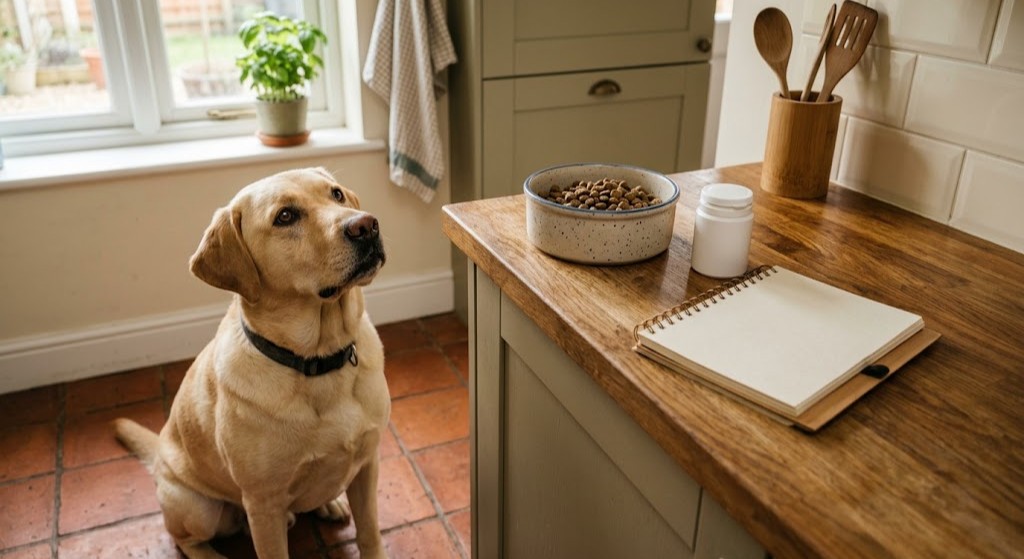
If your dog got a double dose of medication, call now: the vet who prescribed it, your nearest 24-hour emergency animal hospital, the ASPCA Animal Poison Control Center (888-426-4435) or the Pet Poison Helpline (855-764-7661). Both poison lines answer 24 hours a day, and a consultation fee may apply. Have the bottle or packet in your hand. Do not make your dog vomit, do not give any home remedy, and do not skip, halve or move the next dose on your own. Whether an extra dose matters depends entirely on the drug and your dog, and only a vet can judge that.
If Your Dog Got a Double Dose: What to Do Right Now
- Call the prescribing vet first if the clinic is open. They have your dog's record, the diagnosis, the prescription and the strength on file, which is exactly what anyone assessing an extra dose needs. If they are closed or you cannot reach them quickly, call an emergency animal hospital, the ASPCA Animal Poison Control Center at 888-426-4435 or the Pet Poison Helpline at 855-764-7661.
- Do not induce vomiting and do not give food, milk or anything else to "cancel out" the extra dose, unless a veterinarian or poison-control specialist tells you to. Our guide on whether you should make your dog throw up explains why that decision belongs to the vet.
- Do not change the next dose yourself. Skipping it, halving it or giving it late can feel like the obvious fix, but it is a dosing decision, and it belongs to the vet who knows why your dog is on the drug.
- Go straight to an emergency vet if your dog is collapsing, very weak, seizing, trembling, breathing with difficulty or acting very differently from normal.
- Keep the bottle and the label, and put all pet and human medicines out of reach while you sort it out.
This site publishes no dosing information of any kind. Toxicity varies with your dog's size and health and with the drug, and only a veterinarian can assess what an extra dose means for your dog.
"My Partner and I Both Gave It to Him." How Double Doses Happen
This is one of the most ordinary mistakes in a home with a pet on medication, and there is no need to feel foolish about it. It usually happens in one of a few ways.
- Two people, one dog, no record. One person gives the morning tablet before leaving; the other, not knowing, gives it again.
- A pill hidden in food that got eaten twice. A tablet goes into a treat or a meal, the dog seems to spit it out, and a second one is given, but the first was eaten after all.
- A flavored chewable left within reach. The Pet Poison Helpline's page on flavored medications notes that "Many medications for pets now come in flavored or chewable forms to help your pet think they are getting a treat," and warns that "The flavorings added can entice your pet into wanting to consume the entire bottle, leading to an overdose of the medication."
- The wrong pet's medicine. In a home with two animals on different prescriptions, the bottles can look similar.
- A human and pet mix-up. The US Food and Drug Administration's page on storing medications says the "FDA sometimes receives calls from panicked owners who mistakenly took their pet's medication or gave their personal medication to their pet."
Knowing which of these happened is useful on the call, because "one extra tablet" and "the whole bottle is gone" are very different conversations.
Dog Got a Double Dose of Medication: What the Vet or Poison Line Needs
Have these answers ready. You do not need to be certain of every one; say clearly what you know and what you are estimating.
- The drug name and strength, exactly as printed on the label.
- Who the prescription is for. Your dog, another pet, or a person.
- How much extra was given, and whether it could be more than one extra dose.
- The times of the normal dose and the extra one, even if approximate.
- What the medicine is for, and any other medicines or supplements your dog takes.
- Your dog's age, weight, breed and any health conditions.
- What you have seen since, including "nothing so far."
Our checklist of what to bring to the emergency vet for poisoning covers the visit itself if you are told to come in.
Why We Do Not Rank Which Drugs Are "Fine" to Double
Many pages that answer this question sort pet medicines into lists of which are usually harmless twice and which are dangerous. We do not publish that list, for a simple reason: it depends on the specific drug, the strength your dog is on, why your dog takes it, your dog's size and health, and what else is in your dog's system. The Pet Poison Helpline's flavored-medication page makes the same point in general terms, noting that while some medicines have wider safety margins, "others can pose a serious toxicity when ingested in larger quantities."
A list that tells one owner "usually fine" is a list another owner reads about a different dog on a different drug. The prescribing vet can answer this question for your dog in a single phone call. That is the fastest route to a real answer.
"He Seems Completely Normal." Why You Still Call
An extra dose may cause nothing, or it may cause problems that are not visible yet. You cannot tell which from looking at your dog, and the sources we read do not give owners a safe waiting period. Our guide on a dog that ate something toxic but seems fine explains why looking normal is not the same as being in the clear.
If the vet or poison line tells you that monitoring at home is appropriate, they will tell you what to watch for with that particular drug and when to bring your dog in. Follow their instructions rather than a general list.
How to Stop It Happening Again
These are practical household steps, drawn from what the Pet Poison Helpline and the FDA tell owners about storing and giving medication. They do not change your dog's treatment in any way.
One person, or one record
The simplest fix for the "we both gave it" problem is a single written record that everyone uses. The Pet Poison Helpline's flavored-medication page suggests owners mark medication opening dates and dosage on a calendar and keep a list of their pet's medications with names, strengths and quantities. A sheet on the fridge with a tick box for each dose, or a shared note on your phones, does the same job. The rule is simple: check the record before giving, and mark it straight after.
Keep pet and human medicines apart
The FDA advises: "Store pet medications away from people medications to prevent a mix-up." The Pet Poison Helpline's list of human medications that poison pets gives the same advice from the other direction, telling owners never to store pet medications near their own.
Keep the label readable
The FDA says to keep medications "in their original containers with intact labels. It's important that the directions for use and the pet's name are legible." A readable label is what lets you, a partner or a pet sitter check whose medicine it is and how it should be given.
Treat chewables like medicine, not treats
The Pet Poison Helpline advises: "Don't store treats near medications, to avoid confusion between the two." It also says to "Keep all medication in a cabinet that is out of the reach of children or pets."
If It Was Your Cat
The same steps apply: call the prescribing vet, an emergency animal hospital, the ASPCA Animal Poison Control Center at 888-426-4435 or the Pet Poison Helpline at 855-764-7661, and do not adjust the next dose on your own. Tell them it is a cat, and read out the label.
Sources Checked
On September 28, 2026 we read the US Food and Drug Administration's page on how to properly store medications to keep your pet safe (content current as of June 14, 2024) and the Pet Poison Helpline's page on the hidden dangers of flavored medications. On the same day we read the Pet Poison Helpline's list of the top 10 human medications poisonous to pets. This article publishes no dose, threshold or safe amount, and no advice on adjusting a prescription; those decisions belong to your vet.
Frequently Asked Questions
I accidentally gave my dog his medicine twice. Is that an emergency?
Treat it as one until a vet tells you otherwise. Call the prescribing vet or a poison line with the label in front of you. Whether an extra dose matters depends on the drug and on your dog, and only a vet can judge that.
Should I skip my dog's next dose after a double dose?
Not on your own. Skipping, halving or delaying the next dose is a dosing decision. Ask the prescribing vet or the poison line what to do about the next dose when you call.
Who should I call first, my vet or a poison line?
The prescribing vet is often the best first call when the clinic is open, because they already have your dog's record and prescription. If you cannot reach them quickly, call an emergency animal hospital, the ASPCA Animal Poison Control Center at 888-426-4435 or the Pet Poison Helpline at 855-764-7661.
My dog ate the whole bottle of chewable tablets. What do I do?
Call now. The Pet Poison Helpline warns that flavorings can entice a pet to eat an entire bottle, leading to an overdose. Bring the bottle and count what is left if you can.
How do we stop giving double doses?
Use one shared written record, check it before every dose and mark it straight after. Keep pet and human medicines stored apart, as the FDA advises, with the original labels intact.
This article is general information and does not replace veterinary care. If your dog has had more of any medication than prescribed, contact the prescribing vet, the ASPCA Animal Poison Control Center at 888-426-4435, or the Pet Poison Helpline at 855-764-7661 now. Toxicity varies with your dog's size and health, and only a veterinarian can assess your individual dog.