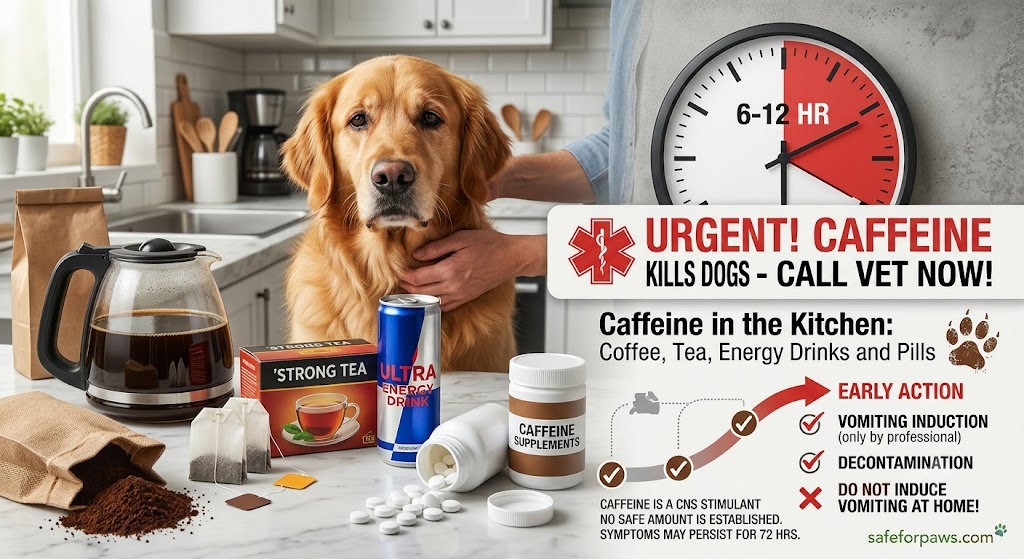
If your dog has swallowed anything containing caffeine, call now. Call your own veterinarian, your nearest 24-hour emergency animal hospital, the ASPCA Animal Poison Control Center at (888) 426-4435, or the Pet Poison Helpline at (855) 764-7661 (both US, 24/7, a fee may apply). Take the packet, can or bottle with you to the phone. Do not make your dog vomit unless a veterinarian or a poison line tells you to, for this dog, right now.
This page is general information from a dog parent who reads veterinary sources, not a veterinarian. It exists so your call to a professional is faster and better informed. It is not a substitute for that call.
If your dog just got into the bin, the page you want is my dog ate coffee grounds.
Caffeine is not the chocolate problem's cousin. It is half of it.
The Merck Veterinary Manual's page on chocolate toxicosis in animals, retrieved 2026-08-28 and carrying a September 2024 review date, names the toxic compounds explicitly:
"The primary toxic principles in chocolate are the methylxanthines theobromine (3,7-dimethylxanthine) and caffeine (1,3,7-trimethylxanthine)."
So caffeine is not similar to what makes chocolate dangerous. It is one of the two things that makes chocolate dangerous.
That single fact reframes the coffee question. People treat coffee as a lesser worry because it is a drink rather than a treat, and Merck's own chemistry says it is the same family of compound, arriving without the sugar, fat and bulk that dilute it in a chocolate bar.
This page publishes no chocolate quantity, no per-weight figure and no threshold of any kind, and it does not need to, because the useful information here is the mechanism and the sources.
Where the caffeine actually is
In rough order of how concentrated it is, and therefore how much a small amount matters:
Caffeine pills and pre-workout or weight-loss supplements. Concentrated, and often not thought of as caffeine at all. A tub of pre-workout powder is the most concentrated caffeine source most households contain.
Used coffee grounds, in the bin. This is the single most common route, and it is the one people assume is safe because the coffee has already been made. Used grounds still contain caffeine, they smell strongly, they are in a bin at nose height, and dogs eat them in quantity rather than by the spoonful.
Coffee beans, whole or ground, unused. More concentrated again, and beans are chewable in a way liquid is not.
Energy drinks. Caffeine plus sugar or sweeteners, and the sweetener is a second question worth asking, because some sugar-free formulations use compounds that raise their own concerns.
Tea, including tea bags. A dog who eats used tea bags is eating the leaves, not drinking the tea, and the bag itself is a separate obstruction question.
Diet and weight-loss products, and some cold remedies. Frequently combined with other active ingredients, which means a dog who got into one may have two problems.
Guarana and similar plant extracts. Merck's chocolate page mentions ma huang and guarana, which contains caffeine, among the CNS stimulants to consider as differentials for a similar presentation. Guarana appears on ingredient lists of drinks and supplements where the word "caffeine" does not.
What to expect, and the timing
Merck's chocolate page, describing methylxanthine toxicosis generally, states:
"Clinical signs of chocolate toxicosis usually occur within 6–12 hours after ingestion."
and
"Clinical signs may persist for up to 72 hours in severe cases."
and
"Death is generally due to cardiac arrhythmias, hyperthermia, or respiratory failure."
Two things follow from the six-to-twelve-hour window, and they are the reason for the phone call.
A normal dog an hour later has told you nothing. That is the general pattern this site returns to, and it is set out in why a normal-looking dog can still be in serious trouble.
The window means the vet has time to work with, and only if you use it. Decontamination options narrow as time passes. The value of calling in the first hour is not that you are panicking correctly, it is that early is when the cheap options exist.
What we will not publish, and why it matters here specifically
No milligram figures. No per-weight thresholds. No "this much coffee for this size dog".
This site's map retired the dose-answering treatment of this subject, and that retirement stands until the founder rules otherwise. The reasoning is worth stating in the open, because it is the whole editorial position of this site:
A threshold table's only use at home is to decide not to call. Nobody looks up a number, finds their dog is over it, and feels better informed; they call. The people the table changes anything for are the people it talks out of calling, and the table cannot see the dog, does not know the concentration, does not know what else was eaten, and does not know that this particular animal has a heart condition.
A chart cannot clear your dog.
What to take to the phone
Whatever the caffeine came in. The container is the single most useful object you own right now, because concentration is the variable a poison line needs and it is printed on the packaging.
If it is a supplement, the ingredient list matters more than the brand, because supplements combine things. The general list of what to grab on the way out is in what to take with you to the emergency vet.
FAQ
Is caffeine toxic to dogs?
Yes. Merck names caffeine as one of the two primary toxic principles in chocolate, alongside theobromine, both methylxanthines.
Are used coffee grounds dangerous for dogs?
They still contain caffeine, and they are the most common route into a dog because they are in a bin, they smell strong, and dogs eat them in quantity. Treat a bin raid involving grounds as a reason to call.
How much caffeine is dangerous for a dog?
We do not publish a figure and we will not. The concentration differs enormously between a used tea bag and a scoop of pre-workout powder, and the assessment belongs to a veterinarian or a poison line who can also account for your dog.
How long until symptoms show?
Merck's stated window for methylxanthine toxicosis is usually within six to twelve hours after ingestion, with signs persisting up to seventy-two hours in severe cases. A dog who looks fine an hour later is inside the window, not past it.
My dog licked a bit of my coffee. Do I need to worry?
Call and describe it. A poison line is entirely comfortable with "a lick from a mug" and will tell you if it is not worth a visit, which is a better outcome than deciding that yourself.
Sources read at the source on 2026-08-28 and named above: the Merck Veterinary Manual, Toxicology, Food Hazards, "Chocolate Toxicosis in Animals" (reviewed September 2024), for the quoted identification of theobromine and caffeine as the primary toxic principles and as methylxanthines, for the quoted six to twelve hour onset window, for the seventy-two hour persistence in severe cases, for the quoted causes of death, and for its mention of ma huang and guarana among CNS stimulants considered as differentials.
No milligram figure, per-weight threshold or lethal-dose figure appears on this page, and none will. Chocolate is named here only because it is where the reference source documents the shared compound; this page adds nothing to the chocolate topic, which this site's map lists as retired.
This page is general information, not veterinary advice, and it does not diagnose or treat. If your dog has eaten something, the call comes first.